

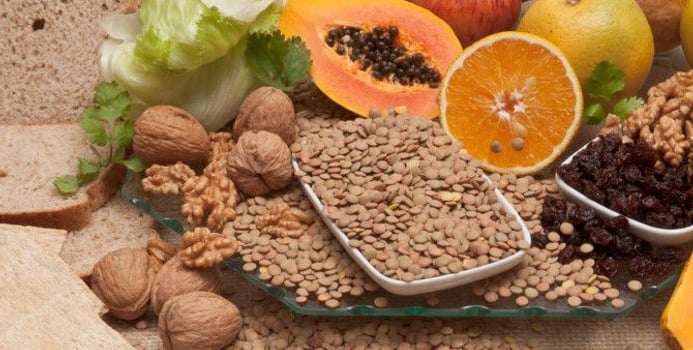
The average American is not consuming enough fiber. Most health experts recommend approximately 25-35 grams of fiber every day. A few of the numerous benefits of fiber include its ability to stabilize blood sugar, reduce cholesterol, decrease risk of colon cancer, prevent constipation, and support a healthy body weight. Let's take a look at the reasons we aren't eating enough fiber, where to find fiber, and a sampling of the fiber content in various foods. Then read on for some hints on how to effortlessly get ample fiber.
Why We Are Lacking Fiber
People are consuming far too many highly processed foods. The refining procedure removes the natural fiber found in plants. Also, most people eat large amounts of animal products, all of which contain zero fiber. The following foods make up a hefty proportion of the typical American's diet and are poor sources of fiber.
- Refined Grains: Commonly wheat and rice- includes most bread, pizza dough, crackers, cookies, bagels, muffins, dry cereals, and pasta.
- Sugars: Found in soda, candy, baked goods, and numerous other processed foods.
- Animal products: Including meat, chicken, fish, milk, cheese, and butter.
- Oils: Often in the form of salad dressings and fried foods.
Where Is Fiber Found?
Plant foods! To be more specific: whole plant foods. While sugar, oil, and refined wheat are technically from plants, because of their processing, they are missing fiber. Instead, choose whole plant foods such as:
- Fruits and Vegetables
- Whole Grains
- Beans and Legumes
- Nuts, Nut Butters, and Seeds
Examples of the Fiber Content in Foods
|
1 Avocado = 11.6g |
¼ cup white flour = .84g |
|
½ cup Black Beans = 7.5g |
Sugar = 0g |
|
1 cup cooked Spinach = 7.5g |
Oil = 0g |
|
1 cup cooked Quinoa = 5g |
Milk = 0g |
|
1 Pear = 5g |
Cheese and Butter = 0g |
|
½ cup walnuts = 4g |
Eggs = 0g |
|
½ cup oats = 4g |
Fish = 0g |
|
¼ cup whole wheat flour = 3.7g |
Chicken, Beef, and all other Meats = 0g |
Tips for Adding More Fiber
- Breakfast: Choose 100% whole-grain cereals with no added sugar or eat oats topped with nuts and ground flax. Include berries, an orange, or any other favorite fruits.
- Lunch: Avoid all refined sandwich breads or wraps. Go for 100% whole wheat. Increase your veggie portions while decreasing your meat and dairy.
- Snacks: Try dried fruits and nuts instead of candies. Blend up a fruit smoothie or have an apple with peanut butter.
- Dinner: Make salad the main dish. Use a tahini or a nut-based dressing on vegetables rather than an oily one. Substitute beans for meat.
Remember, fiber is only found in unrefined whole plant foods. Getting sufficient fiber in your diet is really just as simple as eating more whole plant foods and fewer processed and animal foods. There is no need for fiber supplements such as psyllium husk powder. In fact, excessive amounts of these products can actually decrease your body's absorption of certain vitamins and minerals. Get your fiber the natural way, from your food. Add more fruits, vegetables, beans, and nuts. Stick to whole grains and avoid sugar and oils. Reduce your consumption of animal products. You can't go wrong eating this way and the health benefits extend far greater beyond just the fiber.
Corinne Goff is a Registered Dietitian who is absolutely passionate about food, health, and nutrition. Corinne has a BA in Psychology from Salve Regina University and a BS in Nutrition from the University of Rhode Island. As a nutritionist, her objective is to help people reach their health goals by offering a personalized holistic approach to wellness that incorporates natural foods and lifestyle changes. She works together with her clients to develop daily improvements that they feel comfortable with and that are realistic. She believes that the focus on wholesome, nutrient-rich, real food, is the greatest possible way to become healthier, have more energy, decrease chances of chronic disease, and feel your best. For more information, please visit her website at RI Nutrition Housecalls.com.


